Beyond Aesthetics: The Ergonomics of Perfect TV Placement
Many people make the same mistake when mounting their new TV: they prioritize aesthetics above all else. It is all about the look — how symmetrical it is, or whether it follows the rules of interior balance.
Let’s hang it above the fireplace for a stunning focal point!
Let’s fill that empty space across from the sofa.
It sounds logical enough. But if you ignore functionality and comfort, that perfect setup will not stay satisfying for long. If the mounting height is not calculated correctly, you will quickly find that a beautiful living room is no substitute for a stiff neck and real physical discomfort after a long movie night.
Why “Beautiful” Doesn’t Always Mean “Right”
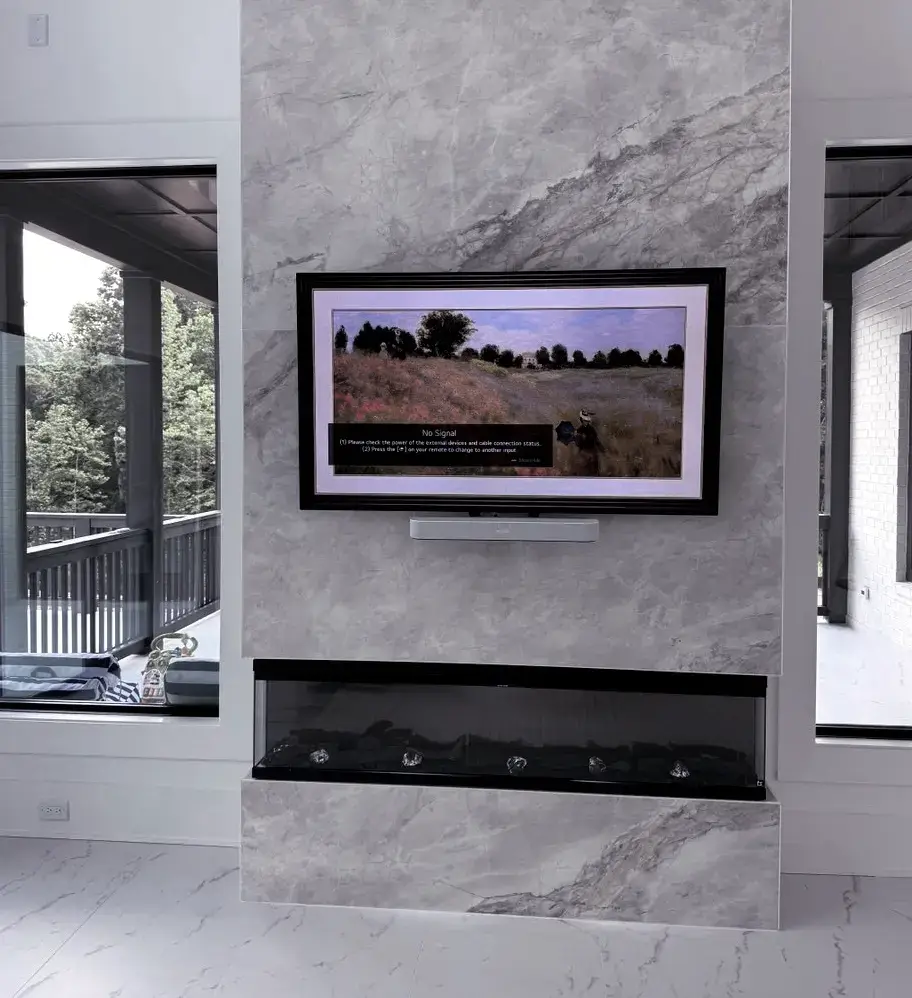
When we arrive on-site in Chicago or Atlanta, our first step is to carefully analyze the so-called viewing points. Interestingly, many professional designers often recommend installing the TV at standing eye level . What is their reasoning? The answer is quite topical: it simply makes the TV look better in professional portfolio photos. However, in reality, people spend 90% of their time watching TV while seated, in a relaxed position, leaning back against the sofa or armchair.
An extremely important nuance: if the center of the screen is positioned above eye level, your neck — and consequently your spine — will be under constant tension throughout the entire viewing experience. It does not take long to guess what that leads to. Therefore, when mounting your device, physiology and anatomy must take precedence over aesthetics and feng shui.
The Math of Comfortable Viewing
There is a well-known “eye-level” rule that always works. It allows you to precisely calculate the optimal mounting height for your TV. Here is how the calculation is done:
- Sit in the position that is most comfortable for you.
- Measure the height of your eye level in that position.
- Calculate the distance from the floor to the center of the screen once the TV is mounted on the bracket.
- Ensure that the center of the screen is positioned either exactly at your eye level or slightly lower, but with no more than a 15-degree deviation from your horizontal line of sight.
However, these parameters can vary significantly depending on the type of furniture you have. For example, if you have a low, deep sofa, the TV should be mounted noticeably lower than in a living room with high-backed armchairs. If you ignore this aspect, you will feel like a tense spectator sitting in the front row of a movie theater.
Versatility in Choosing a Mount
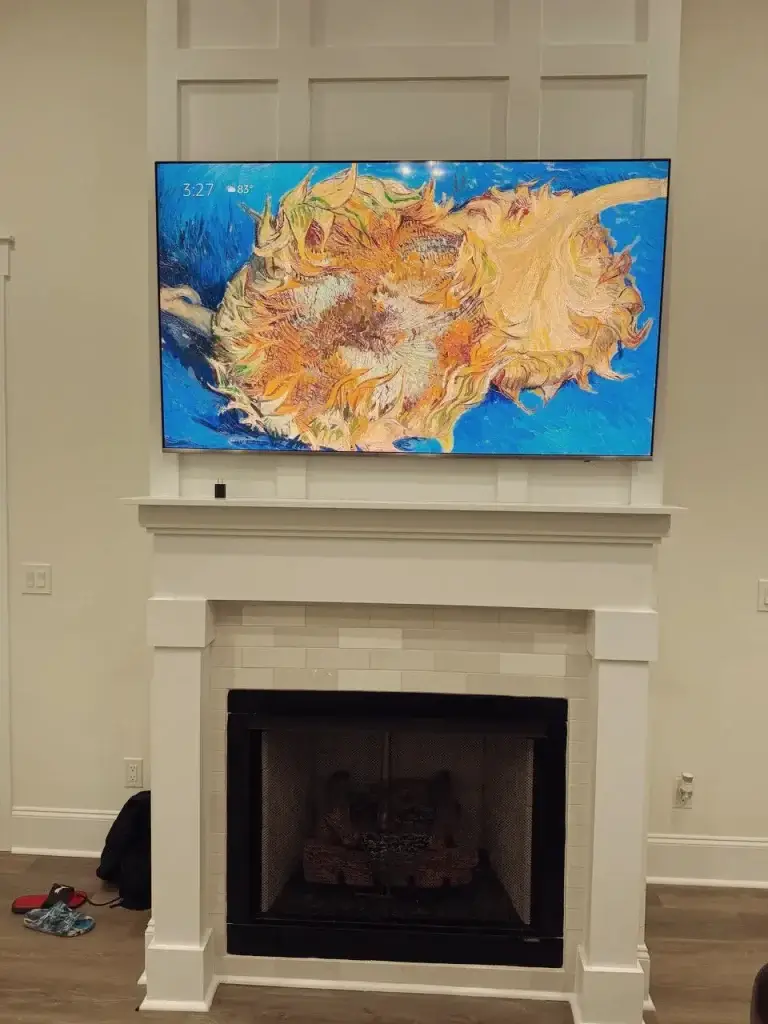
Sometimes, the specific architecture of a room — such as a fireplace mantel or decorative molding — prevents installing the panel at the ideal height. In such cases, we use technical solutions to compensate for these limitations:
- Tilt mounts— these allow you to angle the screen downward, directing the focus toward the viewer. This visually reduces the distance and relieves some of the strain on your neck, even with a higher mounting position.
- Full-motion mounts— these provide the ability to adjust both the tilt and swivel angles depending on where you are, whether you are on the sofa or, for example, in a kitchen area combined with the living room.
Final Checklist Before You Start Mounting
Before you start drilling into the walls of your home or apartment, we always perform a test measurement. This helps avoid mistakes that are difficult to correct later. We recommend that everyone follows this sequence:
- Sit in your most natural and comfortable position on the sofa, then mark the spot on the wall where your gaze naturally falls.
- Use a template or measure the dimensions of your TV to determine where the center of the display will end up.
- Check whether decorative elements or light fixtures are obstructing your view or could create glare at different heights.