How Does Room Lighting Affect TV Viewing?
You've invested in a modern TV with outstanding color accuracy and exceptional picture quality. But even the best display can't guarantee a truly cinematic viewing experience on its own. One of the biggest factors is something many people overlook — the lighting in the room.
Ambient light has a direct impact on how we perceive the image. It can either bring out the full potential of the display or dramatically reduce contrast, washing out deep blacks and rich, vibrant colors until they appear dull and lifeless.
In this guide, we'll explore the science behind TV lighting and explain how light interacts with your screen, your vision, and the professional standards used throughout the film industry.
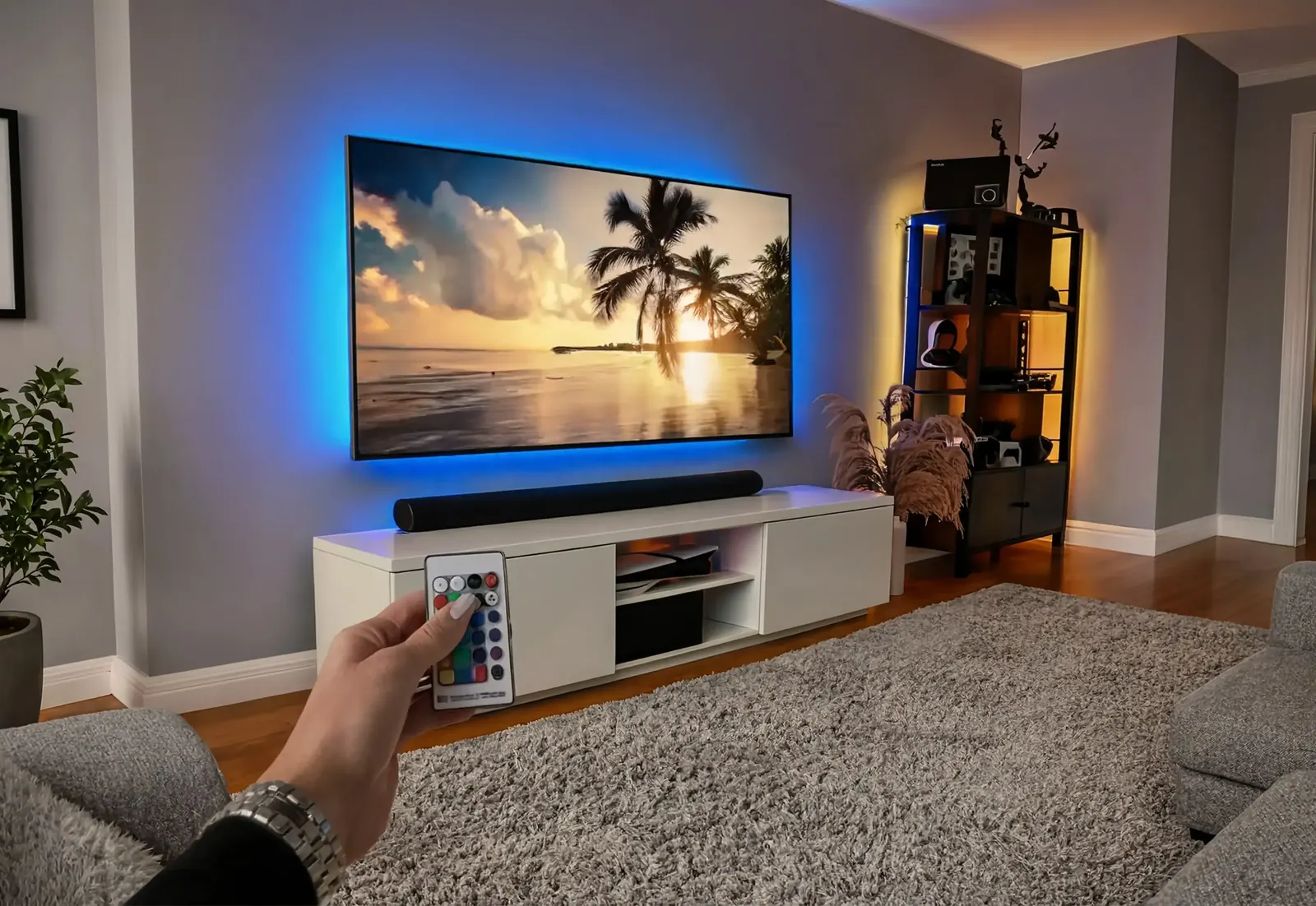
The Enemy of Contrast: Glare, Reflections, and How Your Eyes Perceive Contrast
The biggest challenge for any TV screen is glare and reflections. When sunlight from a window or light from a poorly positioned ceiling fixture hits the display directly, it creates a mirror-like effect that degrades image quality. The severity of the problem largely depends on the screen's surface finish:
- Glossy screens deliver exceptionally rich colors, deep blacks, and outstanding contrast in dark environments. However, they also reflect bright light sources like a mirror, making reflections far more noticeable.
- Matte screens scatter incoming light thanks to their micro-textured surface, significantly reducing reflections. The trade-off is slightly softer black levels and, in some cases, a subtle crystalline sparkle (often referred to as a "sparkle effect") that may become visible in bright, solid-colored areas.
Your eyes are forced to process two competing sources of light at the same time — the image produced by the TV and unwanted ambient reflections. As a result, your brain perceives black levels as lighter than they actually are because external light raises the display's perceived black level, causing deep blacks to appear gray.
To minimize glare and preserve image quality, it's essential to position the TV with the room's light sources in mind:
- Windows: Never mount a TV directly opposite a window. It's also best to avoid placing it where strong daylight strikes the screen from the side at a sharp angle. The ideal solution is to position the TV perpendicular to the window while using blackout curtains or vertical blinds to maintain precise control over natural light.
- Overhead lighting: Bright ceiling fixtures with exposed bulbs positioned above the viewing area or directly in front of the screen can produce distracting glare. For the most comfortable viewing experience, opt for layered ambient lighting instead of relying on a single overhead light source.
The Anatomy of Coziness: Bias Lighting and Color Temperature
Watching a movie in complete darkness isn't the best choice for your eyes, either. When the TV is the only source of light in an otherwise pitch-black room, your pupils are constantly adjusting to dramatic changes in brightness as scenes shift from dark to bright. Over time, this continuous adaptation can lead to eye strain, visual fatigue, and even headaches.
This is where bias lighting comes in. Widely recommended by display calibration professionals and supported by industry standards — including guidelines from the International Telecommunication Union (ITU) — properly configured bias lighting should meet several key requirements:
- Color temperature: The ideal choice is a neutral white light with a color temperature of 6500K (D65). This reference standard ensures that your brain perceives whites on the screen accurately without being influenced by warm or cool light behind the display.
- Brightness level: Bias lighting should remain subtle rather than overpowering. A common recommendation is to set its brightness to approximately 10% of the TV's peak brightness.
- Enhanced perceived contrast: A soft halo of light behind the TV makes blacks appear deeper and more saturated. This effect is caused by a well-documented characteristic of human vision known as simultaneous contrast, which enhances our perception of contrast without changing the image itself.
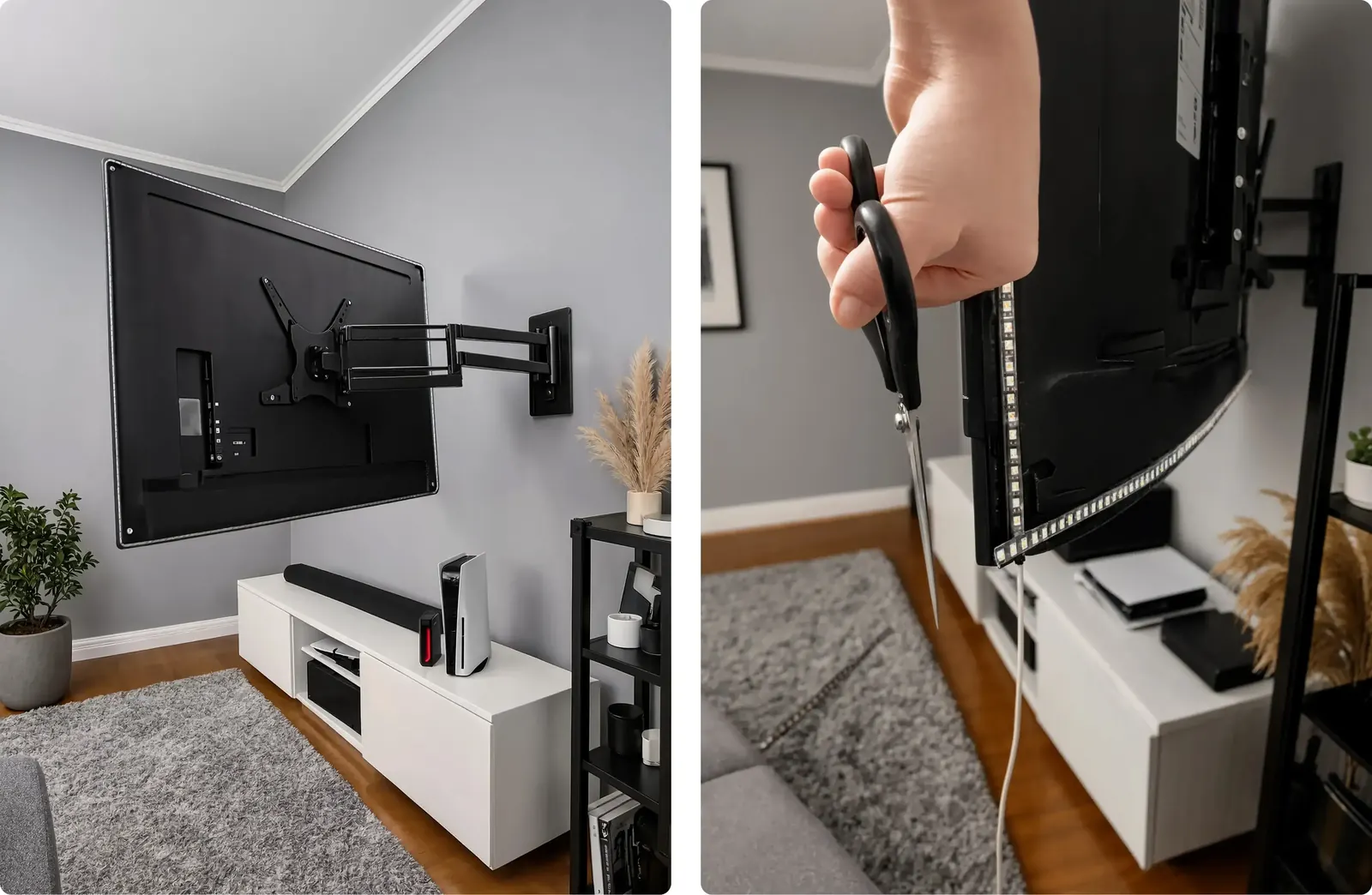
Lighting for Different Viewing Situations
Room lighting should be tailored to the way you use your TV:
- For movie nights: A soft, dim bias light behind the screen paired with minimal ambient lighting in the far corners of the room creates an immersive, theater-like atmosphere while reducing eye strain.
- For gaming or everyday viewing: Brighter, evenly diffused ambient lighting works best. It helps balance the room's overall brightness without allowing direct light to strike the screen, preserving image quality and reducing distracting reflections.
Ultimately, your lighting and your TV should work together as a single system. When brightness levels and color temperature are properly balanced, an ordinary living room can feel like a professionally designed home theater, allowing every detail to appear exactly as filmmakers and content creators intended.