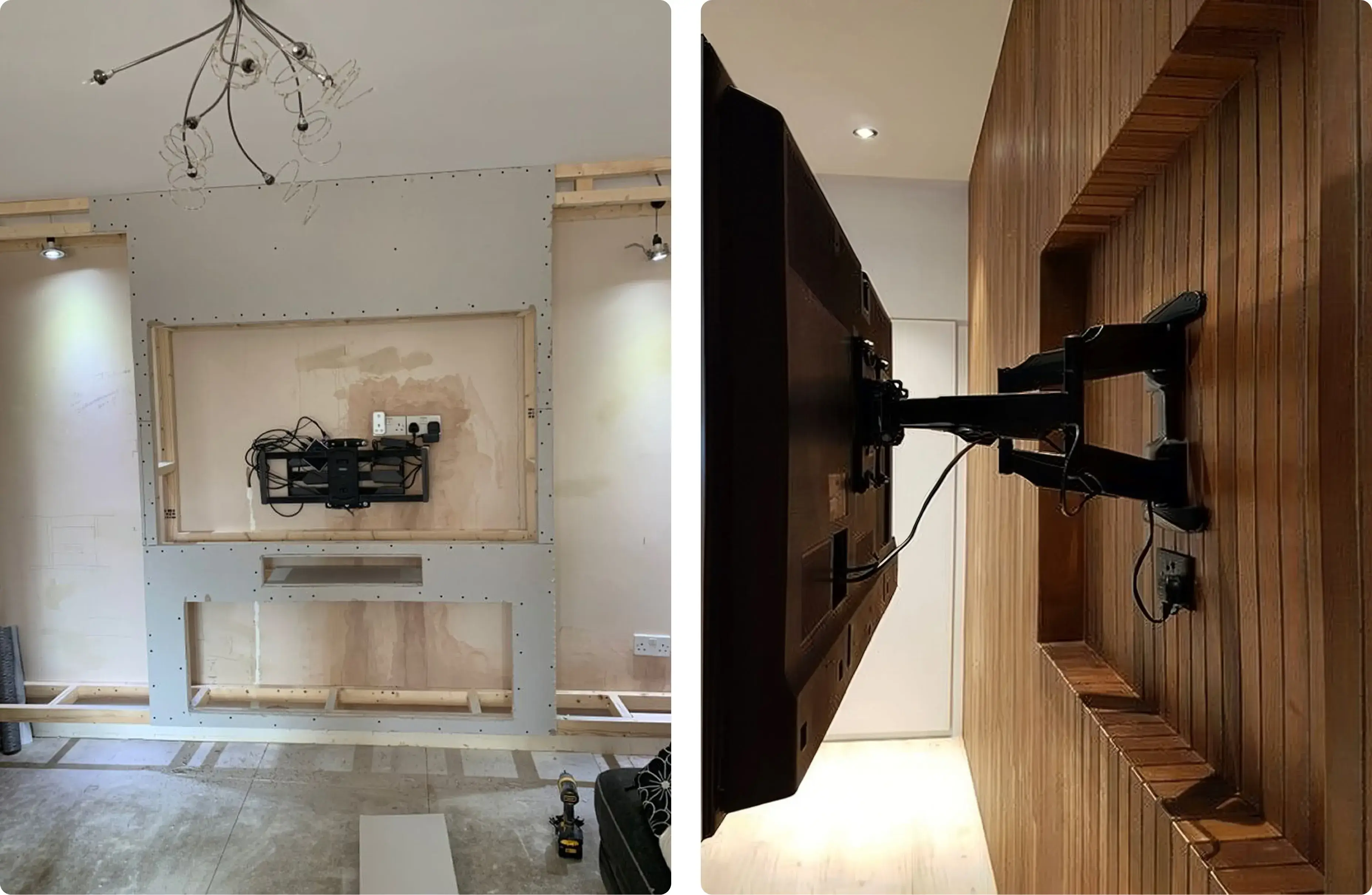
How Wall Type Determines the Right TV Mounting Hardware
Mounting a TV may seem like a straightforward task — right up until you pick up the drill. The stability of the installation and the safety of your expensive, fragile television depend entirely on choosing mounting hardware that's compatible with the wall material. Simply put, hardware designed for brick or concrete will not provide the same level of security when used in drywall alone.
In this guide, we'll explain how different wall materials determine the proper mounting method. We'll also look beyond the TV's weight alone, taking into account the real-world forces and loads that the mounting system must withstand.
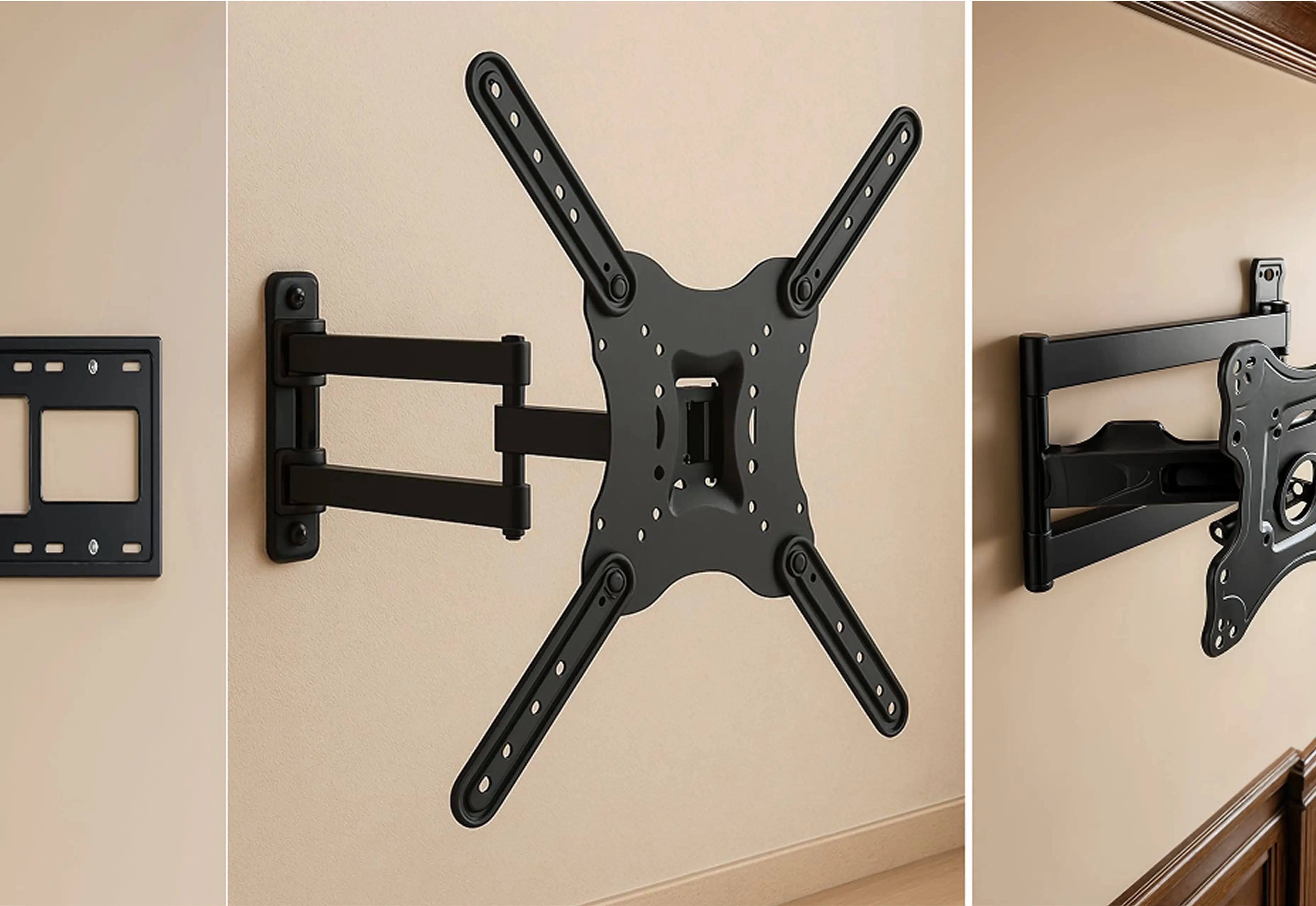
Wood-Framed Walls — The Most Common Residential Setup in the U.S.
In most American homes, interior walls are built using wood studs covered with drywall. Because drywall itself is not designed to carry heavy loads, a secure TV installation depends on locating and fastening the mount directly into the wall studs.
Concrete and Brick — When Heavy-Duty Anchoring Is Required
Concrete and brick walls provide an extremely strong foundation for TV mounting, but they are less common in typical American residential construction. These materials are often found in commercial buildings, apartment complexes, basements, and certain specialty structures.
For these surfaces, we typically use masonry anchors, concrete screws, or expansion anchor bolts designed for high-load applications. The principle is straightforward — as the screw is tightened, the anchor expands inside the drilled hole, creating a secure mechanical bond with the surrounding wall material. To ensure a safe installation, it's essential to use the correct drill bit and match the hole diameter precisely to the anchor. Even slight oversizing can compromise the anchor's holding strength.
Hollow brick and lightweight concrete blocks require a different approach. Standard wall anchors may expand into empty cavities instead of gripping solid material, significantly reducing their holding power. In these cases, extended masonry anchors with a larger anchoring zone or chemical anchors are the preferred solution. Chemical anchors fill internal voids with a high-strength resin, creating an exceptionally secure bond that firmly locks the threaded rod in place.
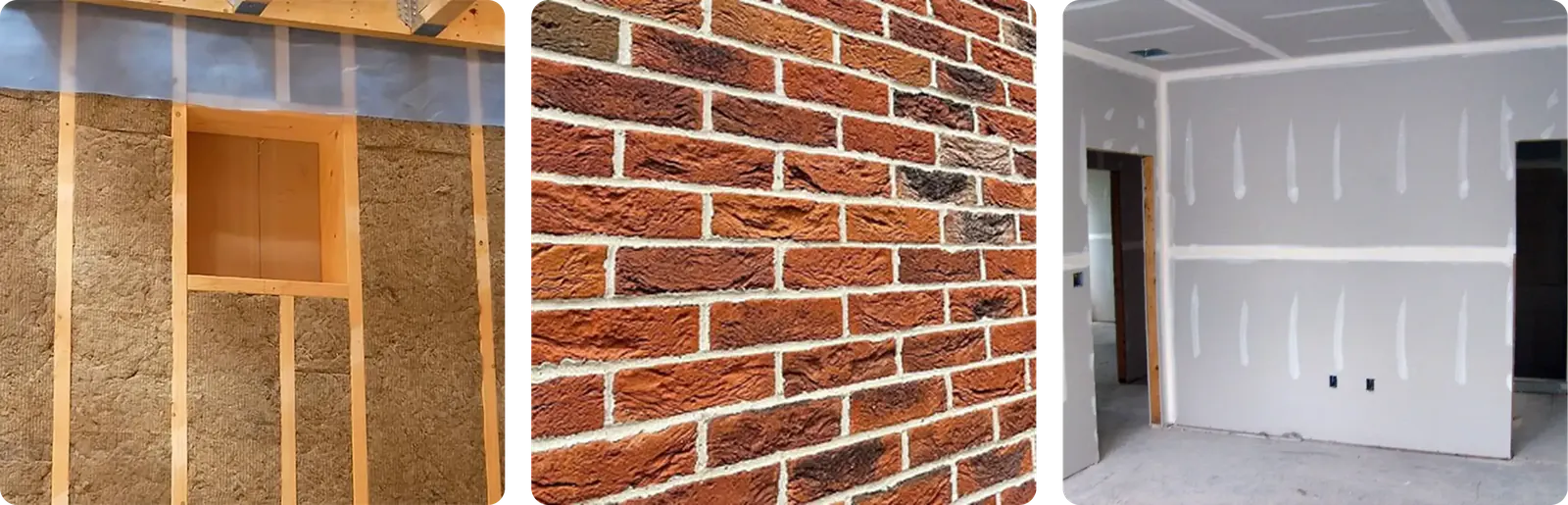
Drywall — Why Stud Placement Matters
Drywall itself is not designed to support the weight of a mounted TV without proper reinforcement or attachment to structural framing.
To ensure a safe installation, we use specialized mounting hardware based on the TV's weight and the wall structure.
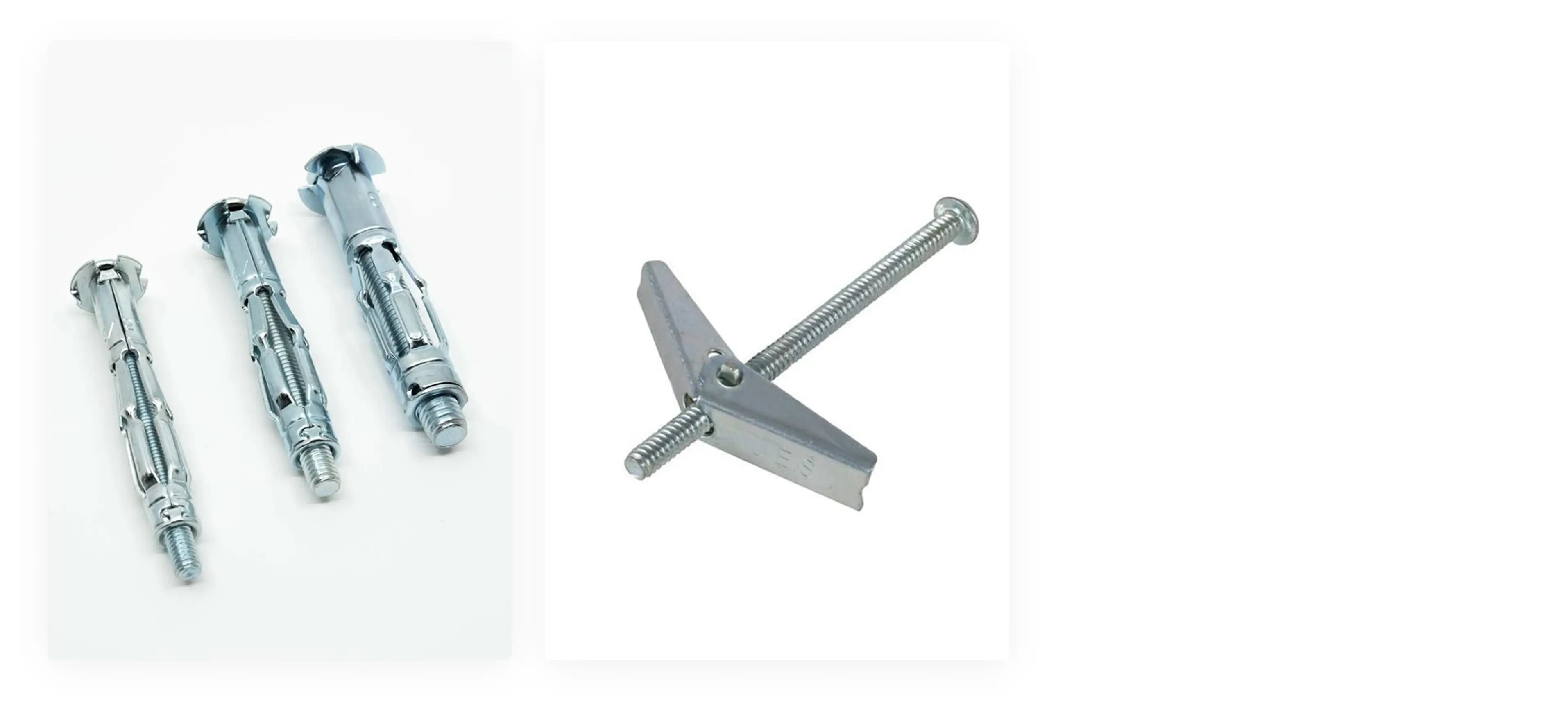
- Molly bolts (hollow-wall anchors): These metal anchors expand behind the drywall as they're tightened, creating a wide clamping surface that distributes the load across a much larger area. This greatly reduces stress on the drywall and improves long-term holding strength.
- Toggle anchors (butterfly anchors): Their folding wings open behind the drywall, providing a secure attachment point for lightweight and medium-weight TVs where structural reinforcement isn't available.
- Wall reinforcement: For heavier televisions or full-motion mounts with long extension arms, the safest solution is to reinforce the wall before installation. We add blocking between studs, allowing the TV mount to be fastened directly into a solid structural support rather than relying on the drywall alone. This method provides maximum stability, eliminates unwanted movement, and delivers the highest level of safety.
Choosing the Right Screws for Wood Studs
Wood studs provide a strong and reliable mounting point, but choosing the right screws and placement is essential for a secure installation. Because wood expands, contracts, and responds to long-term loads over time, selecting the proper fasteners is essential for a secure installation.
For wood-framed walls, we typically use heavy-duty lag screws or structural wood screws specifically engineered for high-load applications. These fasteners feature advanced thread designs that maximize holding strength while reducing stress on the wood. Proper placement is equally important — screws should be driven into solid framing members and positioned far enough from the edges to minimize the risk of splitting. In log homes or structures built with large timber members, spacers or specialized mounting techniques may also be used to accommodate the natural settling and movement of the wood over time.
Professional TV Mount Installation You Can Trust
Choosing the right hardware is only one part of a safe TV installation. At TV Mount Company, our technicians evaluate your wall type, locate structural support points, and select the proper mounting solution for your TV and room layout.
A properly installed TV mount provides more than a clean look — it protects your investment and gives you peace of mind for years to come.