Proper TV Installation Directly Above the Fireplace
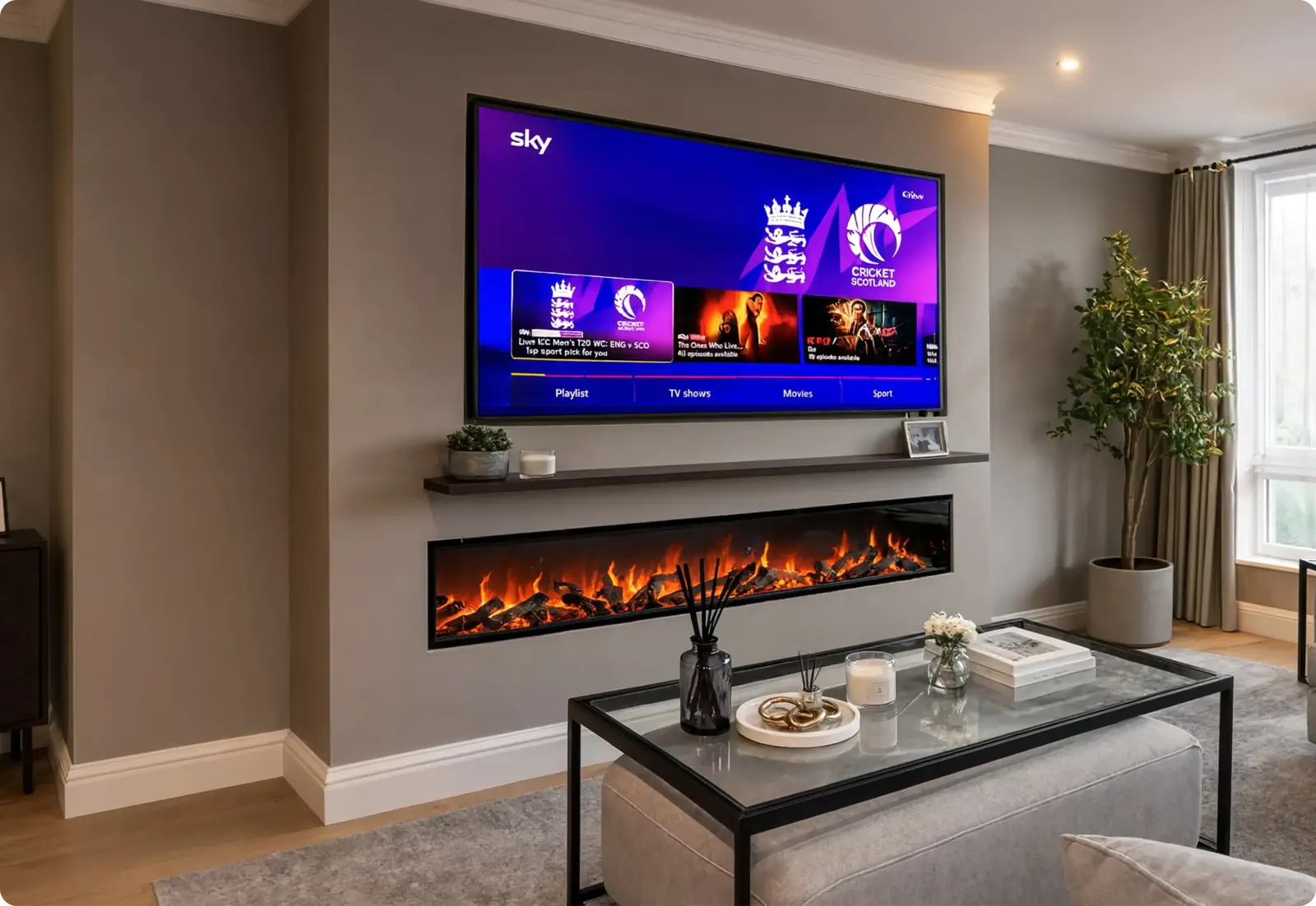
Mounting your TV above the fireplace is the ultimate aesthetic choice. It naturally serves as the room’s focal point, anchoring the entire layout. While many homeowners are drawn to this look, it is important to realize that the technical side of the installation is far more complex than it appears. Getting it right is crucial; otherwise, you risk everything from damaged masonry to overheating your equipment.
Protecting the Structural Integrity of Your Hearth
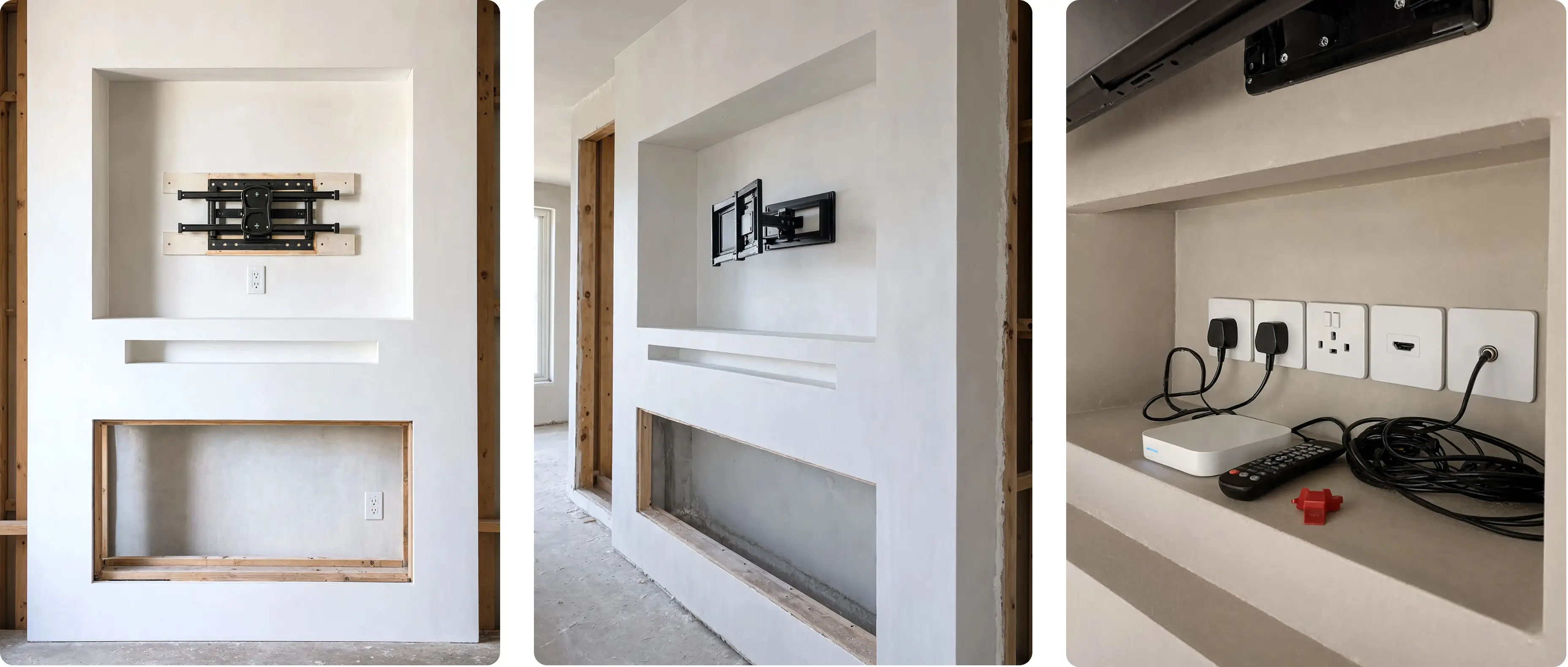
Before a drill ever touches the wall, you must understand the anatomy of the structure. Fireplaces are rarely uniform or perfectly flat surfaces. They are often composed of diverse materials — brick, stone, marble, or heavy timber cladding — each presenting its own unique installation challenges. Brick chimneys may look sturdy, but they can be surprisingly brittle. In older buildings, particularly historic brownstones, the mortar may have aged and weakened, making it prone to crumbling under the stress of a mounting bracket. Similarly, stone veneers are often too thin or lack the necessary depth to house secure, reliable anchors.
The real challenge lies in the quality of the mounting points. It is vital to assess exactly what lies behind the decorative facade. We need to know if we are anchoring into solid masonry blocks, a load-bearing header, or merely a fragile, superficial layer. Incorrect depth or the wrong type of hardware is the leading cause of mounting failure. Furthermore, remember that your TV's weight is not a static load. When using a full-motion, articulating mount, the leverage applied to the bolts increases exponentially every time you extend the screen away from the wall. This dynamic load requires a much higher safety margin than a standard, static flush mount ever would.
Thermal Processes: The Invisible Enemy of Your Electronics
Heat is the primary enemy of modern television components. LCD, OLED, and LED screens are comprised of delicate liquid crystals and complex electronics — all of which are designed to operate within specific temperature ranges. Placing a display directly above a fireplace creates a source of concentrated, rising heat that can drastically reduce the device's lifespan. Even if you do not use the fireplace often, the radiant heat from the structure itself can lead to internal component degradation.
To combat this, we employ several critical strategies. First, we assess the temperature gradient at the specific wall location. This includes monitoring surface temperatures while the fireplace is in operation. If the readings exceed safety thresholds, the installation may require a heat shield or a specialized standoff solution. Second, the type of mount is crucial. A mount that allows for a greater distance from the wall — or one that features a tilt mechanism — can create an air buffer against rising heat currents. However, the most effective solution remains proper thermal insulation or, in some cases, installing a mantle shelf to deflect the heat flow away from the display.
The Ergonomics of Vertical Placement
Beyond the structural and thermal challenges, there is the issue of human physiology. When a TV is mounted high above a fireplace, the viewer is often forced into an uncomfortable, strained neck position. This so-called "cervical strain" — or neck tension — is a leading cause of discomfort and headaches during extended viewing sessions. The ideal ergonomic position for a TV is at eye level when the viewer is seated. Mounting a display above a mantle almost always violates this principle.
It is worth considering specialized equipment to address this. We recommend high-tech articulating mounts that feature a drop-down mechanism. When the fireplace is not in use, the TV sits high — maintaining the room's aesthetic appeal. When it is time for a movie night, the mount allows the display to be lowered to a comfortable, near-eye-level position. This mechanical approach allows you to balance the desire for a clean, designer-focused space with the physiological necessity of ergonomic comfort.
A Safety Checklist for Professional Installation
Professional installation is about more than just mounting hardware — it is about mitigating risks and ensuring long-term durability. A standard professional protocol includes several mandatory steps:
- Measuring the wall's temperature to detect any hidden heat sources or weak structural points.
- Using high-grade masonry anchors rated for the specific wall material and load, which guarantees penetration into the structural substrate — not just the decorative facade.
- Careful cable management that accounts for heat exposure, utilizing fire-rated materials for any in-wall routing or wiring behind the mount.
- Rigorous testing of the full-motion mechanism to ensure that the weight distribution does not create excessive stress zones at the anchor points.
In conclusion, while the fireplace remains the most sought-after location for a television, it is not a project to be approached lightly. The intersection of architectural design, thermal management, and human ergonomics requires a sophisticated — and balanced — approach. By relying on professional assessment and specialized hardware, you can achieve the aesthetic result you desire without compromising the safety of your home or the longevity of your equipment.