The Art of Integration: Taming 98-Inch Displays in Historic Spaces
Every time I return from a site where we’ve just finished installing a 98-inch display or larger, I’m struck by the realization that we’re doing far more than just technical installation — it’s a form of high-precision engineering art. When you’re handling a display of this magnitude, occupying a significant portion of a wall, the room’s entire atmosphere shifts instantly. This is no longer just a television; it’s a full-scale “digital window” into another world. Yet, behind this visual magic and the flawless picture, there lie hours of intense, unseen engineering work that the homeowner never even has to think about.
Physics vs. Aesthetics: The First Line of Defense
The primary challenge when working with screens of this scale is the immense weight combined with the extreme fragility of the panel. Once you step beyond the standard 75- or 85-inch threshold, consumer-grade wall mounts are simply not up to the task. This is where professional-grade installation systems come into play, designed to support massive, distributed loads without the slightest hint of panel deflection.
Many clients forget that walls in historic buildings are essentially a “layer cake” of brick, plaster, wood lath, and often hidden voids. Working here in Chicago, in homes that carry the weight of history, our first mission is to ensure the surface can withstand not just the static weight of the device, but the structural micro-vibrations inevitable in a busy metropolis. We employ specialized steel frame structures that anchor directly into the building’s load-bearing members. This allows us to “decouple” the load from the plaster and decorative finishes, transferring it safely to the building’s rigid core.
Geometric Puzzles and Logistics
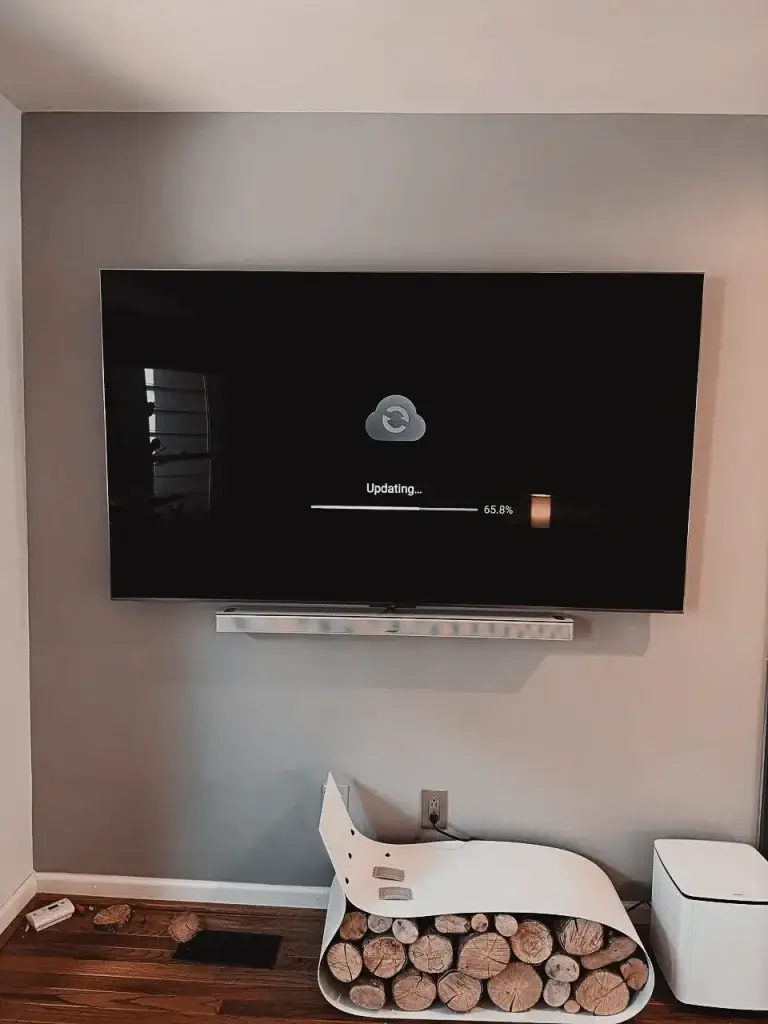
Another aspect that often brings a wry smile to those who haven’t been “in the field” is the physical logistics within the site itself. Trying to navigate a monolithic panel over two meters wide through narrow hallways, spiral staircases, or the intricate turns so typical of classical architecture can feel like solving a complex non-Euclidean geometry puzzle where every centimeter matters.
For us, preparation turns into a meticulous operation where the cost of a mistake is simply too high:
- We conduct pre-installation laser scanning of all transit paths to ensure every turn radius accommodates the factory packaging, which is often significantly larger than the screen itself.
- If the architectural features make it impossible to move the panel as a single unit without risking damage to the antique interior, we plan for the temporary removal of door frames or even window sashes.
- In extreme cases, where interior staircases are impassable, we bring in professional riggers and external hoists. This allows us to feed the equipment through a facade window, bypassing the cramped corridors of the historic building entirely.
The “Thermal Breath” of Technology
When a 98-inch panel is in active use, it generates a significant amount of heat. In a recessed wall niche or a tight cabinetry integration, without proper ventilation, that screen can become a source of critical overheating after just a few hours. This isn’t just a comfort issue; it’s a question of panel longevity. Localized overheating is the sworn enemy of modern electronics, causing pixel degradation and premature failure of internal components.
Therefore, when designing the mounting cavity, we always integrate hidden forced-convection systems. We create inconspicuous channels that draw cool air from the base of the niche and vent the heated air upward, behind the false wall or into the ceiling plenum, utilizing natural convection boosted by ultra-silent fans. It is crucial that these systems remain completely invisible to the eye, preserving the aesthetic purity of the interior for which the installation was commissioned in the first place.
Precision Adjustment: The Moment of Truth
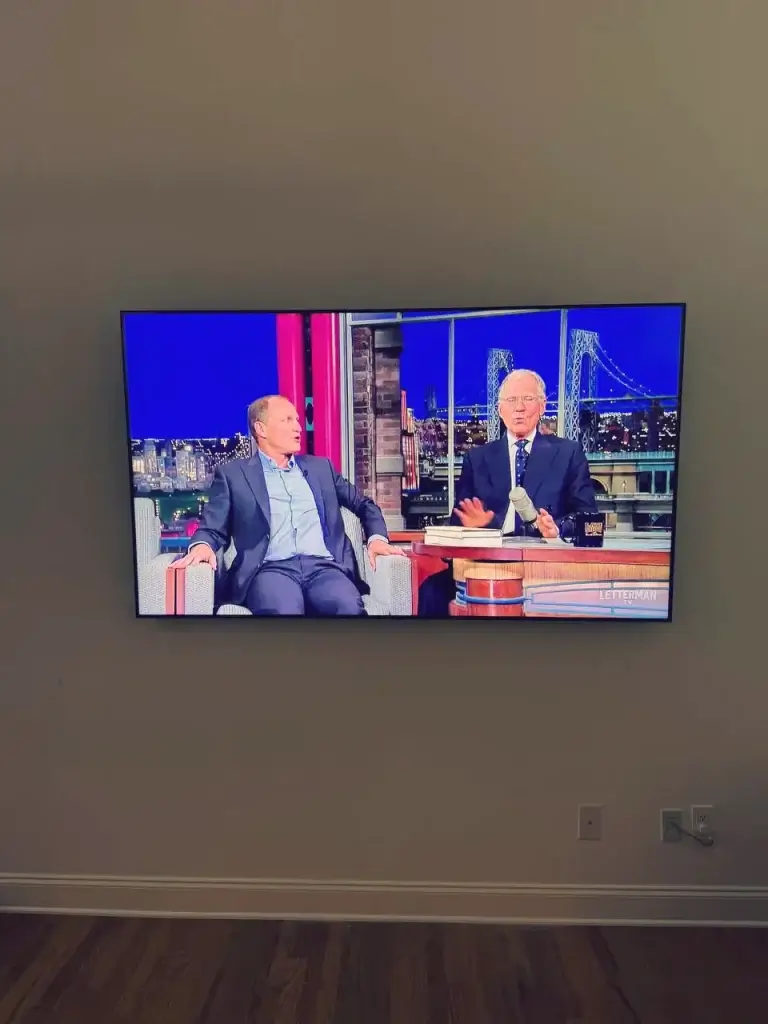
TThe final phase of installation is alignment, requiring surgical precision. At this scale, even a one- or two-degree error in leveling is glaringly obvious to the naked eye. The screen must be set perfectly square to the horizon and the room’s vertical axes. We use high-precision laser levels to ensure zero deviation across any plane.
Once the panel is securely anchored, we reach the “moment of truth” — image calibration. A massive display requires nuanced adjustment of color temperature, contrast, and brightness so the picture doesn’t “fall apart” or look flat. We calibrate each profile to the room’s specific lighting conditions, accounting for glare from windows at different times of day. Only once we see the image become deep, natural, and immersive do we know the job is done. We can finally set down the tools, exhale, and simply enjoy the result — a transformation that has permanently changed the space we’ve been working in.