Safety Foundation: Why Your Wall Needs Reinforcement Before Installing a TV
At first glance, it seems that any wall is strong enough to support the weight of a plasma TV or any other device. In reality, however, the situation is more complex and ambiguous. Modern, massive TVs with diagonals from 65 to 98 inches, especially when paired with mounting brackets, create tremendous stress. If you are planning to install a TV on a drywall or hollow block wall, the standard set of dowels included in the package may not be enough. If you do not want your expensive device to crash to the floor, it is vital to take care of wall reinforcement during the early preparation stages.
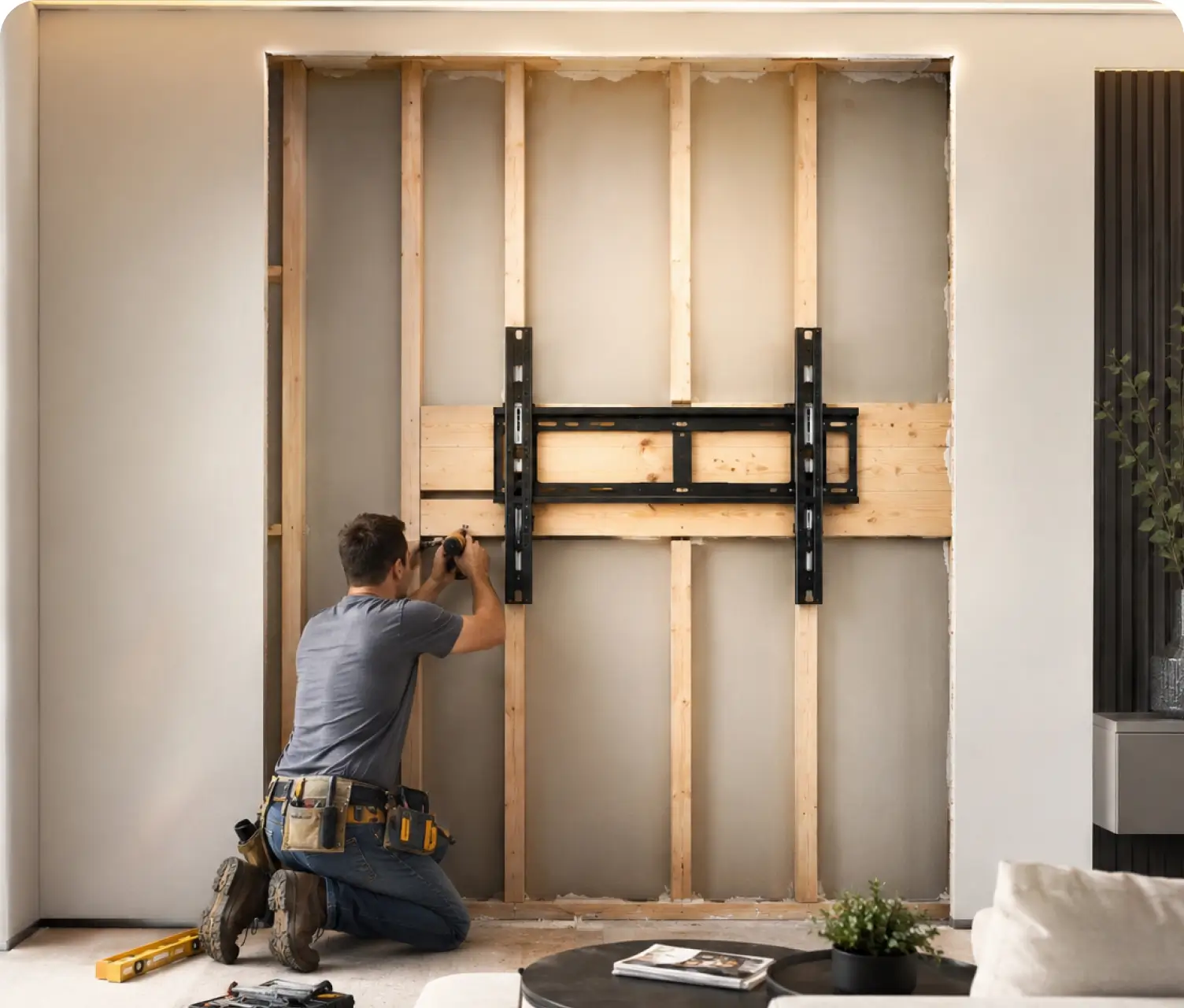
What is a backing and why is it necessary
In the professional community, we call this element a backing. Essentially, it is a reliable support frame that is installed inside the wall before the finish coat is applied. Most often, this element consists of a plywood sheet at least 18–20 mm thick or a steel plate at least 4 mm thick, securely fixed to the guide profiles.
Why is this necessary? If your wall is made of drywall, aerated concrete, or other fragile materials, it may simply not withstand the point pressure. A TV weighing 30–50 kg with a mount that you extend half a meter from the wall creates a colossal lever. A backing is an engineering solution that distributes the load over a larger area. It turns an unreliable partition into a sturdy foundation capable of supporting the weight of the structure for decades without the risk of cracks appearing in the plaster or the wall block collapsing.
Integration into the Design Project
The right approach to installation always begins in parallel with the development of the design project. If you know in advance which zone the TV will be located in, the technician can install the necessary structure under the layer of drywall or decorative panels. This is the ideal option. After the finish work is completed, you will not visually see any traces of the intervention, but you will be absolutely certain that the base will support even the most massive equipment.
Challenges of Installation in a Finished Interior
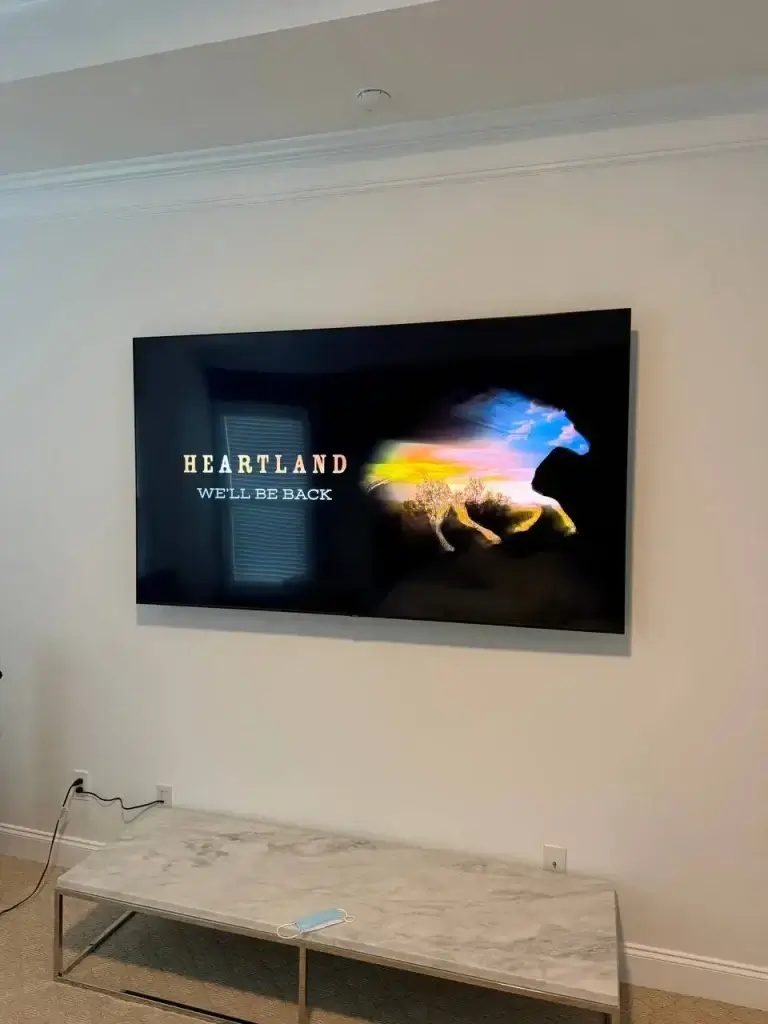
If you have decided to install a TV after the renovation is complete, the task becomes significantly more complex. In such situations, we face the need to locate hidden metal profiles using metal detectors or use specialized chemical anchors that allow for a reliable bond even in hollow materials. This is always a search for a compromise, requiring extreme precision in calculations and the presence of professional wall-scanning equipment to avoid damaging the hidden wiring that often runs through the TV zone.
Practical Tips Before Starting Work
Do not rely on luck or a visual assessment of wall strength.
- Initial inspection. Before any drilling begins, we always perform diagnostics of the site. This allows us to understand the true composition of the wall, whether it is hollow, brick or solid concrete, and to select the optimal type of fastener.
- Proper selection of hardware. If a backing was not provided in advance, we use specialized dowels for hollow structures that expand inside the wall, creating an umbrella anchor, or chemical anchors for porous materials.
- Professional consultation. We strongly recommend discussing the placement of media equipment with technicians while still at the rough finishing stage. This will save your budget and stress in the future, as correcting the aftermath of a TV falling would cost dozens of times more than installing a simple plywood backing.
Remember that a TV installation is not only about aesthetics, but first and foremost about the safety of your home. The foundation laid during the renovation stage is that invisible detail that ensures peace of mind and comfort for years to come. If you have any doubts about the reliability of your home walls, entrust this matter to professionals who know how to look deeper than just the bracket installation manual.